



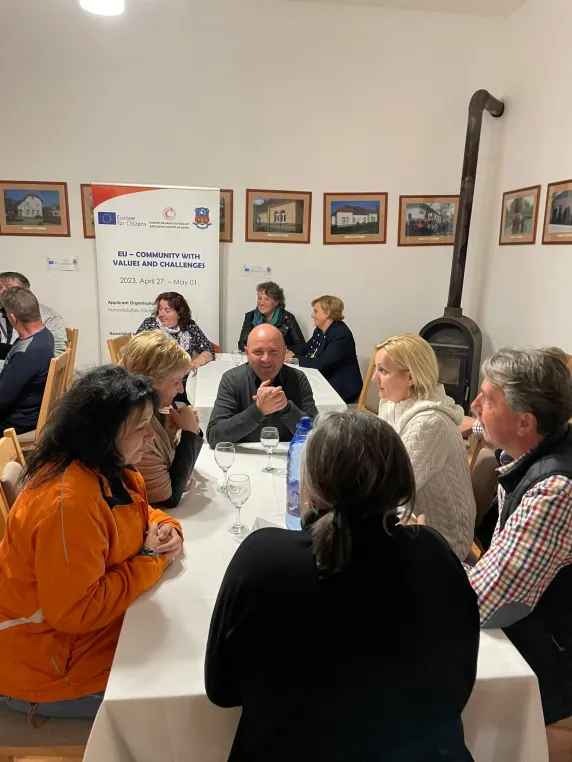
Saturday was a more theoretical day since almost the whole of it was devoted to discussing different topics. The first topic was rights and obligations of an EU citizen. Among the different nuances this theme offered, we discussed how EU citizens should behave in their community, how they can contribute to society, and what rights do they have nowadays and how these should be improved in some cases. Following the same dynamic as the previous day, the participants were grouped in different tables and shared their ideas towards this topic. After a while, they rotated from one table to another. This method has proved to very productive since all of the participants are able to share their ideas and listen to the other partners.
After we finished this discussion, we arranged a tour around Ocland for our guests. Even though this is a small village, there is a lot of history hidden behind its streets. Some of the stops were the Catholic and the Unitarian churches where the participant could witness the important role of religion in our culture.
After this small break, we went back to work but, this time, with a different topic. The participants talked about the Corona Virus crisis during this session. The discussion led to many different points of view since every association experienced different difficulties, which at the same time gave them a different point of view. As we all know, the Corona Virus crisis has been one of the worst economic and social crisis in the last decades for Europe, and being able to discuss its effects and to reflect on how we can improve our system for possible similar situations was very helpful and illustrative.
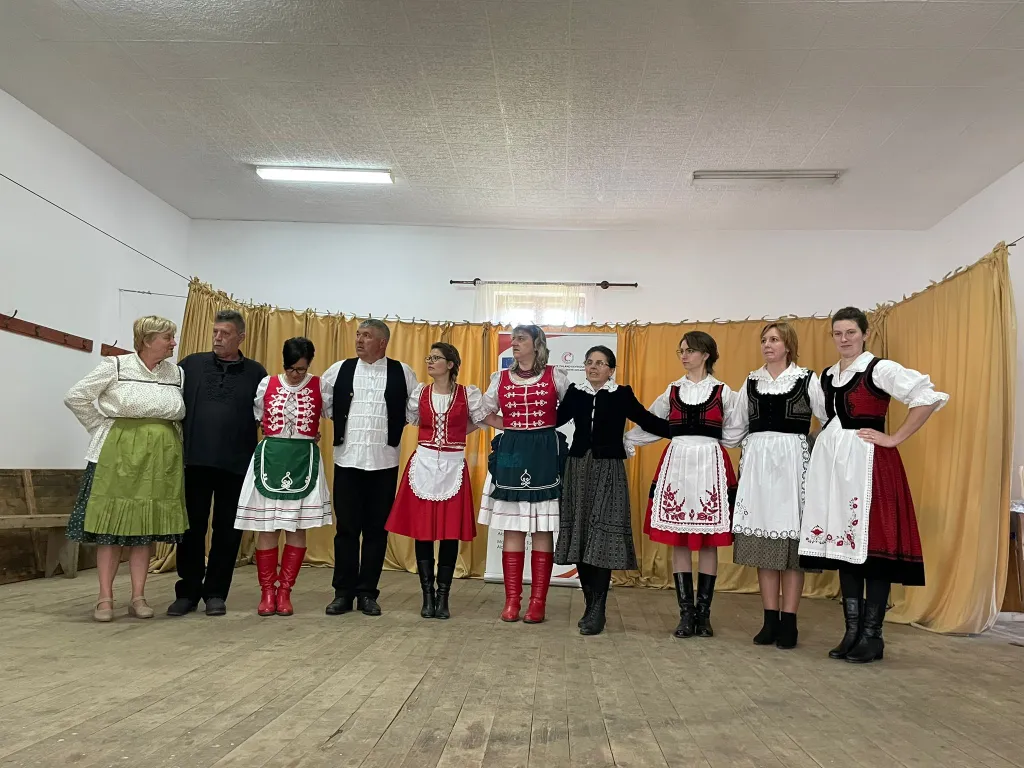
Once we finished our discussion, we stepped into a more fun and energetic activity. If there are two things apart from language that represent a community’s identity, those are clothing and dances. Thus, in this session, we counted on the help of some neighbours from Ocland who performed some of our most iconic folk dances, and showed our guests how our traditional clothes look like. After the performance, the participants were taught some very simple steps so that they could also dance along. We all had a lot of fun!
After this activity, we went back to our discussions, and this time the topic was volunteering. It’s always very interesting to share our ideas about how we can improve things, but it’s of no use if we don’t put them into practice. That’s why volunteering is such an important part of our projects. Also, it’s the most practical way to connect with the European youth and to let them experience by themselves how they can really make an impact on society.
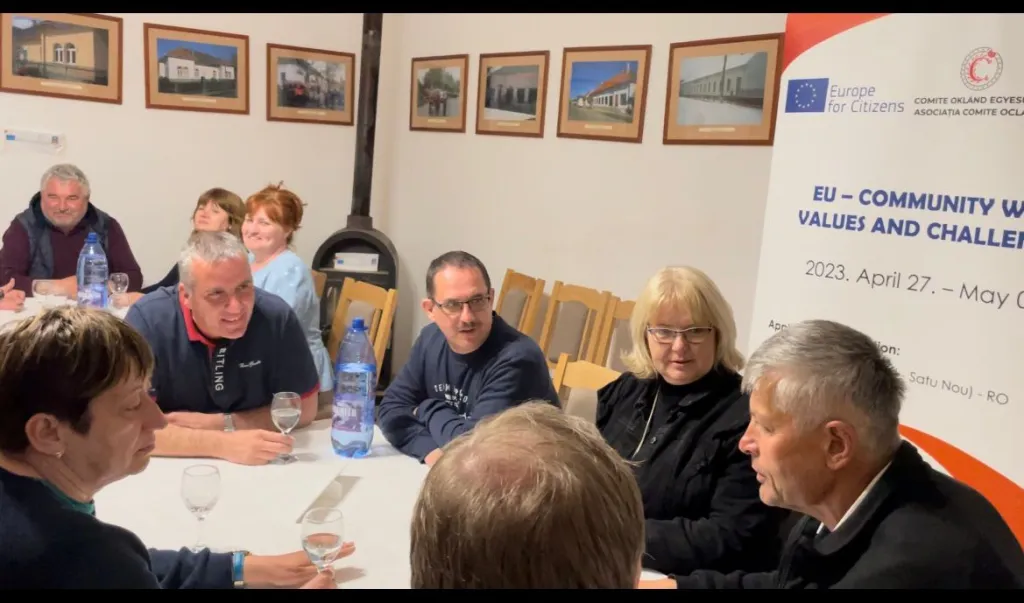
The last topic of the day was discrimination and, in this session, the participants discussed how this issue should be addressed by a legal, economic and social perspective. Once again, the multiculturality of the participants was extremely useful in the debate because it contributed with very different points of view and experiences to analyse.